

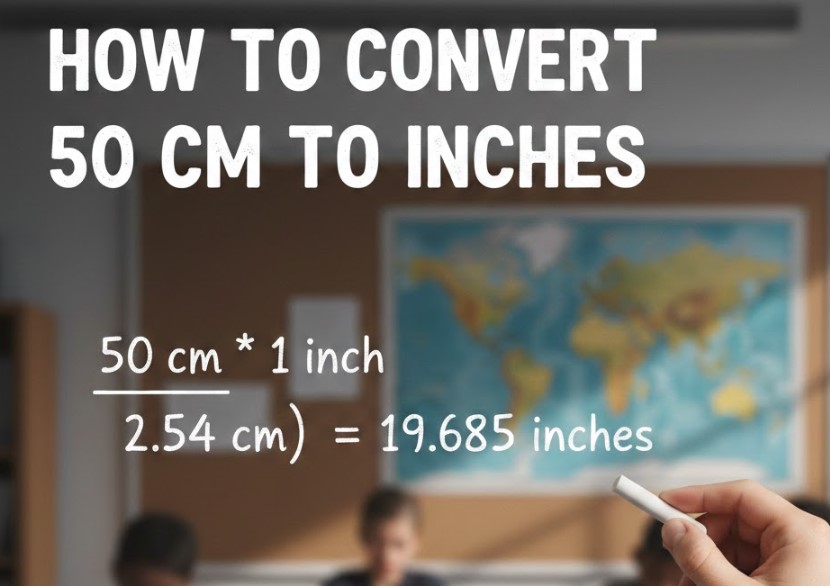
When it comes to converting measurements between metric and imperial systems, it’s essential to know the correct formulas and techniques. A common conversion that many people encounter is how to convert 50 cm to inches. Whether you’re working on a project that involves precise measurements, comparing different units, or simply curious about the difference between centimeters and inches, understanding how to convert these units is vital.
In this article, we will explore the process of converting centimeters to inches and provide you with helpful examples, including conversions for other common measurements such as 104 inches to cm, 15.3 cm to inch, and more. Our goal is to guide you through these conversions in a clear, engaging, and authoritative manner, ensuring that you can confidently perform these calculations yourself.
Understanding the Conversion Formula
To effectively convert centimeters to inches, we need to apply a simple mathematical formula. The conversion factor between centimeters and inches is:
- 1 inch = 2.54 cm
This means that to convert centimeters to inches, you divide the length in centimeters by 2.54. For example, to convert 50 cm to inches, you would perform the following calculation:Inches=2.54Centimeters
Using this formula, let’s now explore how to convert 50 cm to inches.
How to Convert 50 cm to Inches
To convert 50 cm to inches, you simply divide 50 by 2.54:Inches=2.5450≈19.69 inches
So, 50 cm is approximately 19.69 inches. This conversion is often useful in various fields, such as design, construction, and personal measurement needs.
Also Read: How to Play Spades: A Complete Guide for Beginners and Experts
Other Common Metric to Imperial Conversions
Now that you know the basics of converting 50 cm to inches, let’s explore other common conversions that might come up in your day-to-day life or work. Below, we’ll go through several examples using the same formula and provide the conversion results for various lengths in both centimeters and inches.
104 Inches to cm
To convert 104 inches to cm, we use the same formula, but this time we multiply by 2.54 (since 1 inch = 2.54 cm):Centimeters=104×2.54=264.16 cm
Thus, 104 inches is equal to 264.16 cm.
15.3 cm to Inch
To convert 15.3 cm to inches, we divide by 2.54:Inches=2.5415.3≈6.02 inches
So, 15.3 cm is approximately 6.02 inches.
17.9 cm to Inches
Similarly, for 17.9 cm to inches, divide by 2.54:Inches=2.5417.9≈7.05 inches
Therefore, 17.9 cm equals approximately 7.05 inches.
223 cm to Inches
To convert 223 cm to inches, divide by 2.54:Inches=2.54223≈87.8 inches
So, 223 cm equals 87.8 inches.
23.3 cm to Inches
For 23.3 cm to inches, divide by 2.54:Inches=2.5423.3≈9.17 inches
Thus, 23.3 cm is about 9.17 inches.
Why Do You Need to Convert Units?
Understanding how to convert 50 cm to inches and other similar conversions can be incredibly helpful in many different contexts. Here are just a few reasons why:
- International Communication: Different countries use different measurement systems, so knowing how to convert between centimeters and inches is essential for global communication, particularly in trade, construction, and design industries.
- Personal Use: Whether you’re measuring your height, buying clothes online, or working with furniture measurements, being able to convert between centimeters and inches will make your life much easier.
- Scientific Research: Many fields of study, including engineering and physics, require precise measurements. Knowing how to convert units quickly and accurately is crucial.
Also Read: How to Cancel DoorDash Order | Full Refund & Easy Steps
Real-Life Applications of Conversions
Home Improvement
When undertaking a home renovation project, especially when ordering furniture or materials, measurements often come in centimeters, but you might prefer inches for easier visualization. Knowing how to convert centimeters to inches can help you avoid mistakes when buying or building.
Fashion and Clothing
Clothing sizes are often measured in inches in countries like the United States and the UK, whereas many international brands use centimeters. Converting between the two can help ensure that you purchase the correct size.
Design and Architecture
In fields like design and architecture, dimensions in drawings and blueprints may be given in centimeters or inches, depending on the location of the project. Mastery of these conversions ensures that your designs are accurate and comply with international standards.
Conversion Tips and Tricks
While the formula for converting centimeters to inches is straightforward, here are some tips that can make conversions even easier:
- Use Conversion Charts: You can find online conversion charts or use tools like Google to quickly convert units. For instance, you can search for “50 cm to inches” and get an instant result.
- Memorize Key Numbers: For certain common conversions, memorizing the approximate values can help speed up calculations. For example, 100 cm is roughly 39.37 inches, and 1 inch is 2.54 cm.
- Leverage Technology: Many apps and websites are designed to perform unit conversions with ease, including online calculators and mobile apps.
Also Read: How to Change a Tire: A Complete Step-by-Step Guide for Cars, Bikes, and More
Frequently Asked Questions
Is 50 cm equal to 19.69 inches?
Yes, 50 cm is approximately 19.69 inches. This is derived by dividing 50 by 2.54, the conversion factor from centimeters to inches.
How do I convert centimeters to inches quickly?
To convert centimeters to inches quickly, divide the length in centimeters by 2.54. For example, to convert 15.3 cm to inches, you would divide 15.3 by 2.54, which gives you approximately 6.02 inches.
How do I convert 104 inches to centimeters?
To convert 104 inches to cm, multiply the number of inches by 2.54. Therefore, 104 inches equals 264.16 cm.
Is the Panda Express Nutrition Calculator accurate?
The Panda Express Nutrition Calculator is designed to provide users with accurate nutritional information based on the restaurant’s menu. However, like all online calculators, there may be slight variations due to recipe changes or regional differences. It’s always a good idea to consult official sources for the most current information.
Conclusion
Converting between centimeters and inches is a simple yet essential skill that many people need in various aspects of their lives. From how to convert 50 cm to inches to understanding 104 inches to cm and other conversions, this article has provided you with the necessary tools to perform these calculations with ease. Whether you’re working in construction, fashion, or any other field, these conversions are vital for success.
By following the methods and tips outlined in this guide, you will be able to confidently convert between the metric and imperial systems, ensuring accuracy in your work or personal projects.
For More Visit Little D Brewfest
