

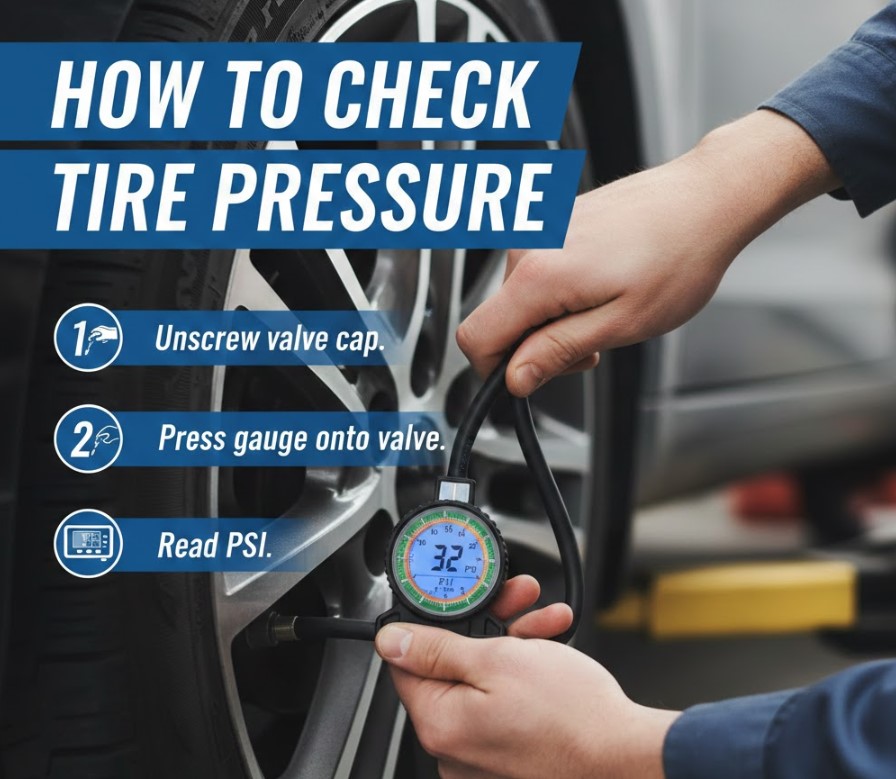
Proper tire pressure is crucial for maintaining your vehicle’s safety, fuel efficiency, and tire longevity. Many drivers overlook the importance of checking tire pressure regularly, but ensuring your tires are properly inflated can make all the difference. In this guide, we’ll show you how to check tire pressure step by step, including on specific car models like the Honda Civic, Honda Accord, Mazda CX-5, Tesla, and Audi Q5.
In this article, you’ll discover how to check tire pressure with and without a gauge, at a gas station, and by using your vehicle’s built-in features. Plus, we’ll cover the importance of correct tire pressure and provide tips to make this simple process even easier.
Also Read: How to Soften Brown Sugar Quickly and Effectively
Why Checking Tire Pressure Is Important
Tire pressure directly impacts your vehicle’s performance and safety. Incorrect tire pressure can lead to several issues:
- Poor Fuel Efficiency: Under-inflated tires increase rolling resistance, making the engine work harder and decreasing fuel efficiency.
- Tire Wear: Both over-inflated and under-inflated tires wear out unevenly, leading to more frequent replacements.
- Reduced Handling and Braking: Tires with improper inflation affect your vehicle’s ability to grip the road, which could compromise safety, especially in wet or icy conditions.
- Increased Risk of Blowouts: Overinflated tires are at higher risk of bursting, while underinflated tires can overheat and lead to a blowout.
With regular checks, you can avoid these issues and ensure a safer, more efficient driving experience.
How to Check Tire Pressure Correctly
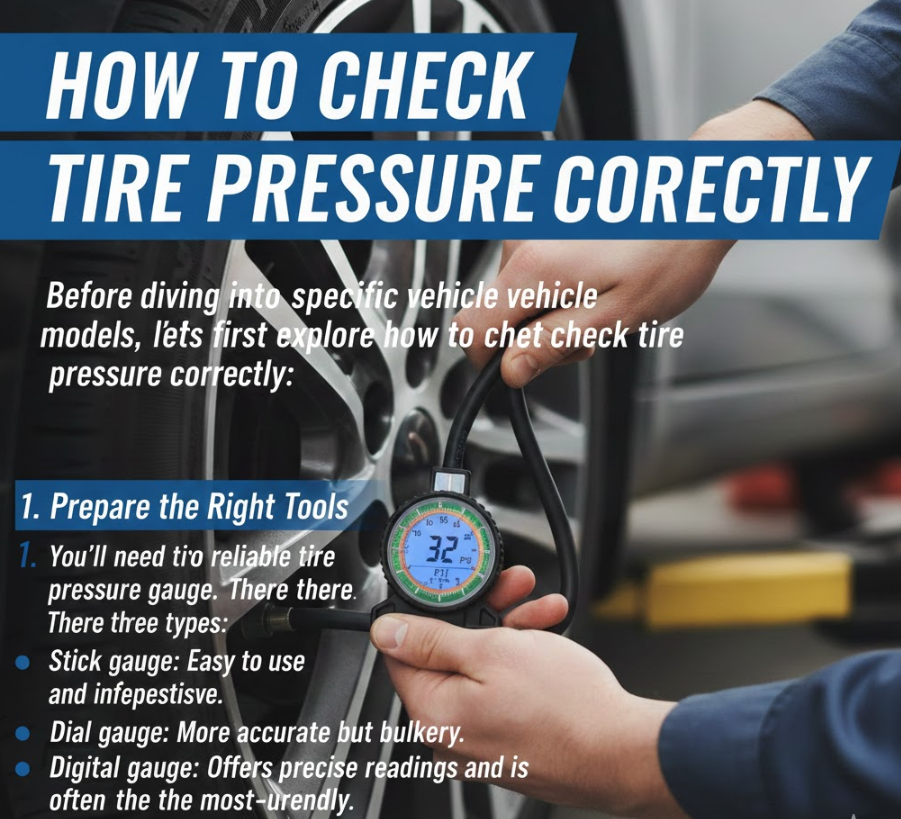
Before diving into specific vehicle models, let’s first explore how to check tire pressure correctly:
1. Prepare the Right Tools
You’ll need a reliable tire pressure gauge. There are three types of gauges:
- Stick gauge: Easy to use and inexpensive.
- Dial gauge: More accurate but bulkier.
- Digital gauge: Offers precise readings and is often the most user-friendly.
2. Check Tire Pressure When Tires Are Cold
Tire pressure should always be checked when the tires are cold, meaning the car has been stationary for at least 3 hours or has driven no more than 1 mile at low speed. This ensures the most accurate reading since driving heats up the tires, causing air expansion.
3. Find the Correct Tire Pressure
Each vehicle has a recommended tire pressure, usually listed in the owner’s manual or on a sticker inside the driver’s side doorframe. For most passenger cars, the optimal tire pressure is between 30-35 PSI (pounds per square inch).
4. Measure the Pressure
Place the tire gauge onto the valve stem and press down firmly to get a reading. The gauge will show the current tire pressure. If it’s too high or too low, you can adjust accordingly by adding or releasing air.
5. Adjust the Tire Pressure
- To increase pressure, use an air compressor (available at gas stations or car workshops).
- To decrease pressure, press the small metal stem in the valve to release air.
Once the pressure is correct, replace the valve cap securely.
Also Read: How to Calculate Square Feet: A Step-by-Step Guide
How to Check Tire Pressure on Different Vehicles
Different car models have slightly different processes for checking tire pressure, especially with built-in tire monitoring systems. Below, we explain how to check tire pressure on popular vehicles like the Honda Civic, Honda Accord, Mazda CX-5, Tesla, and Audi Q5.
How to Check Tire Pressure on Honda Civic
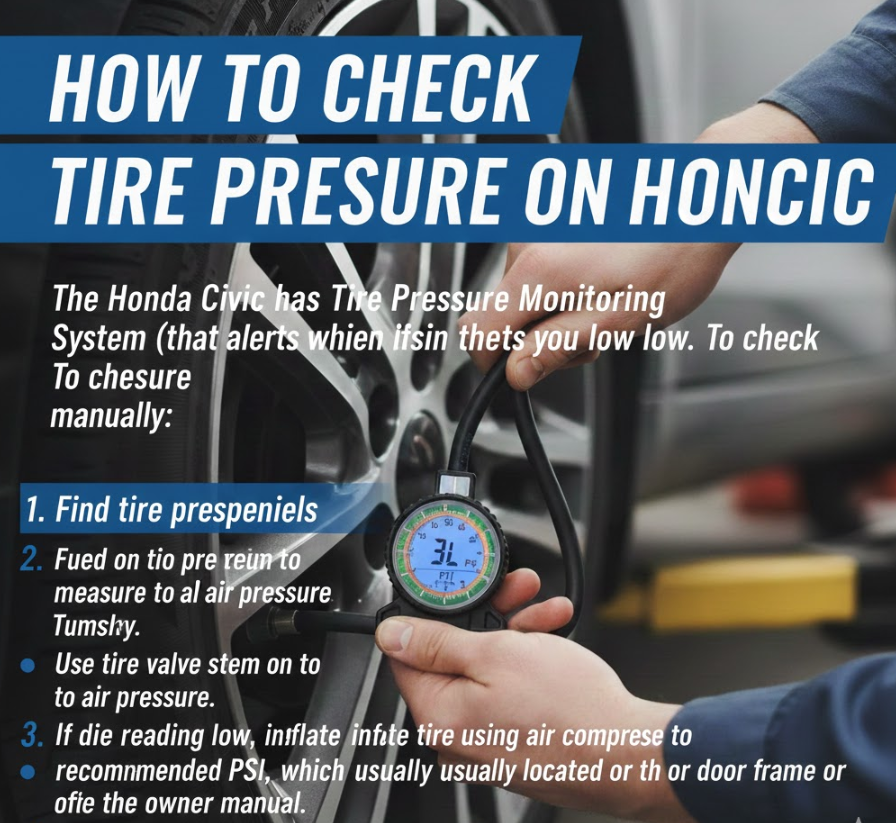
The Honda Civic has a Tire Pressure Monitoring System (TPMS) that alerts you when tire pressure is low. To check the pressure manually:
- Find the valve stem on each tire.
- Use a tire pressure gauge to measure the air pressure.
- If the reading is low, inflate the tire using an air compressor to the recommended PSI, which is usually located on the door frame or in the owner’s manual.
If the TPMS warning light is on, you should check the pressure with a gauge to confirm the issue.
How to Check Tire Pressure on Honda Accord
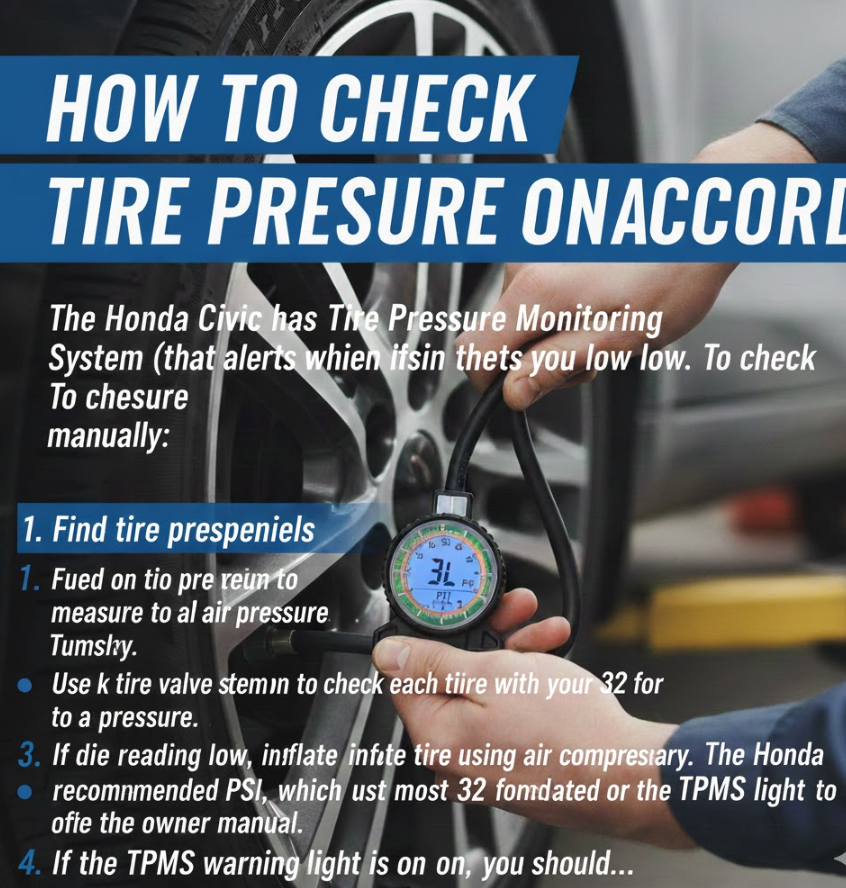
Checking tire pressure on a Honda Accord is similar to the Civic:
- Use the valve stem to check each tire with your tire pressure gauge.
- Check the vehicle’s recommended pressure, often 32 PSI for most Honda Accords.
- Add or release air as necessary. The Honda Accord also features a TPMS light to alert you if tire pressure is low.
How to Check Tire Pressure on Honda CR-V
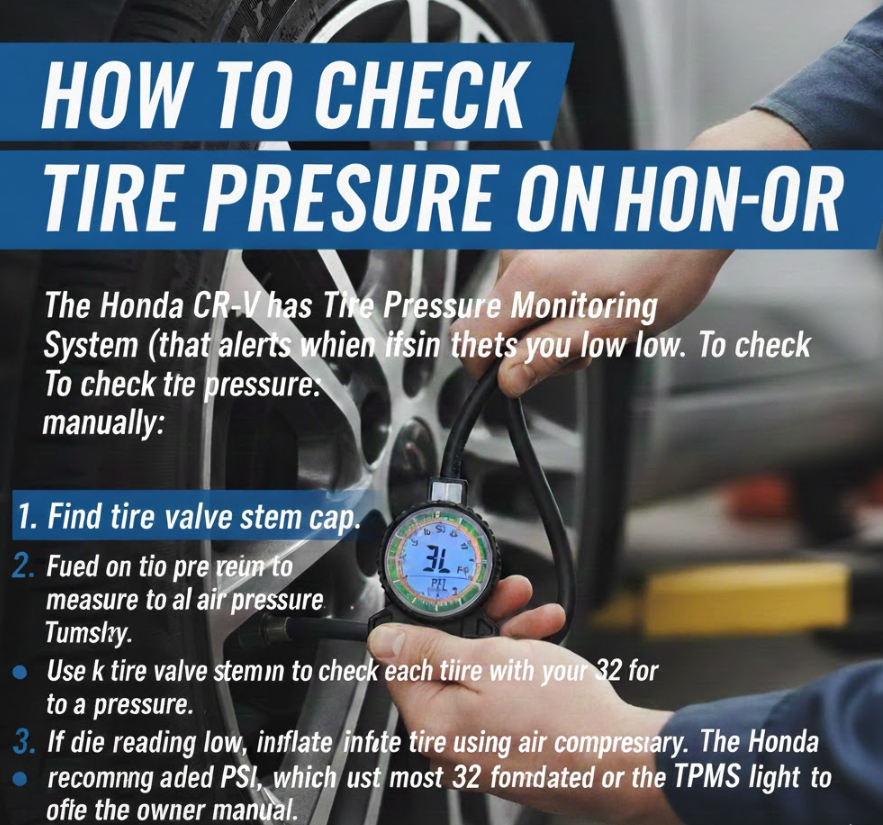
The Honda CR-V also comes equipped with TPMS. To check the pressure manually:
- Remove the valve stem cap.
- Attach your gauge and get a reading.
- Adjust the tire pressure by adding or removing air based on the recommended value.
If the TPMS light is on, use a gauge to verify whether the tires are underinflated.
Also Read: How to Jumpstart a Car: Step-by-Step Guide with Cables and More
How to Check Tire Pressure on Mazda CX-5
For the Mazda CX-5, the process is straightforward:
- Find the valve stem and check the tire pressure with a gauge.
- The recommended pressure is typically 32 PSI, but check the door frame for exact values.
- Adjust the tire pressure as needed.
The CX-5 has TPMS, which will alert you when the tire pressure is low, but manual checks are always recommended for accuracy.
How to Check Tire Pressure on Audi Q5
To check tire pressure on the Audi Q5, follow these steps:
- Use the tire gauge to check the pressure at each tire’s valve stem.
- Audi recommends a pressure of around 35 PSI for the Q5, but you should check the specific value in the manual or doorframe.
- The Q5 is equipped with a TPMS to notify you when tire pressure is low.
How to Check Tire Pressure on Tesla
Tesla vehicles, including the Model 3, Model S, and Model X, have an advanced TPMS that monitors tire pressure in real-time. However, checking the tire pressure manually is still possible:
- Use a tire pressure gauge at the valve stem.
- Tesla typically recommends a tire pressure of around 42 PSI, but refer to the car’s manual for the exact figure.
- Inflate or deflate tires as needed.
If the TPMS alerts you, manually checking the tire pressure will help verify the issue.
Also Read: How to Get Ink Out of Clothes: Expert Tips for Every Situation
How to Check Tire Pressure Without a Gauge
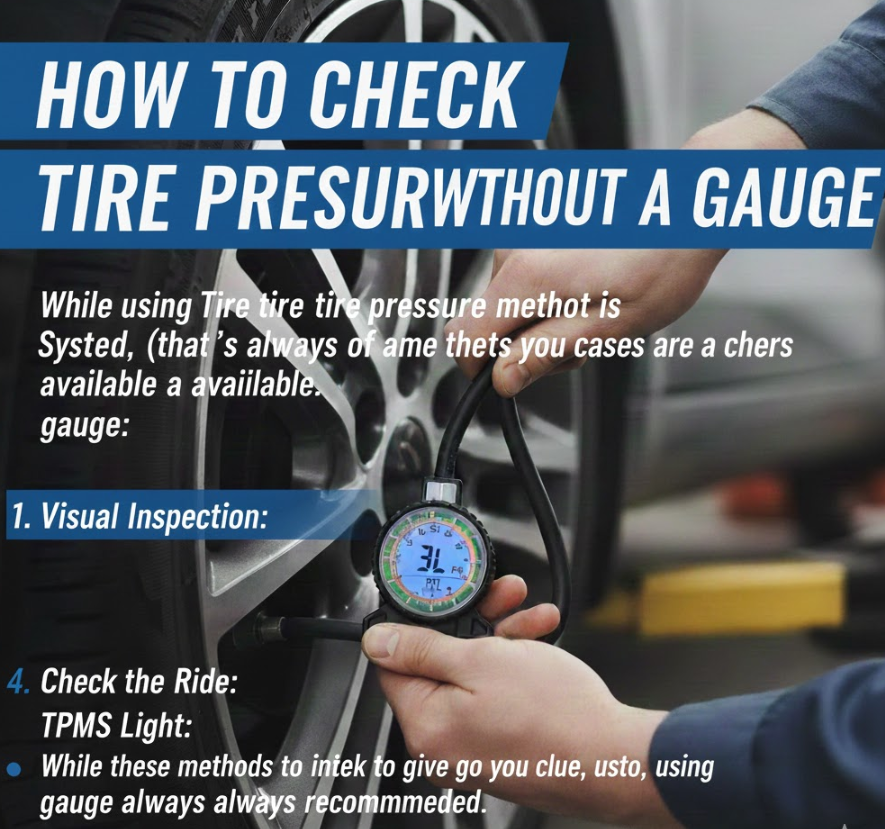
While using a tire pressure gauge is the most accurate method, it’s not always available. In such cases, here are a few ways to check tire pressure without a gauge:
- Visual Inspection: If the tire looks flat or the vehicle is dragging, the tire pressure may be low. However, this method is unreliable for exact readings.
- Check the Ride: If your vehicle feels sluggish or the steering is less responsive, it could indicate underinflation.
- TPMS Light: Many modern cars come with a built-in tire pressure monitoring system that alerts you to low pressure.
While these methods can give you a clue about tire pressure, using a gauge is always recommended for accuracy.
How to Check Tire Pressure at a Gas Station
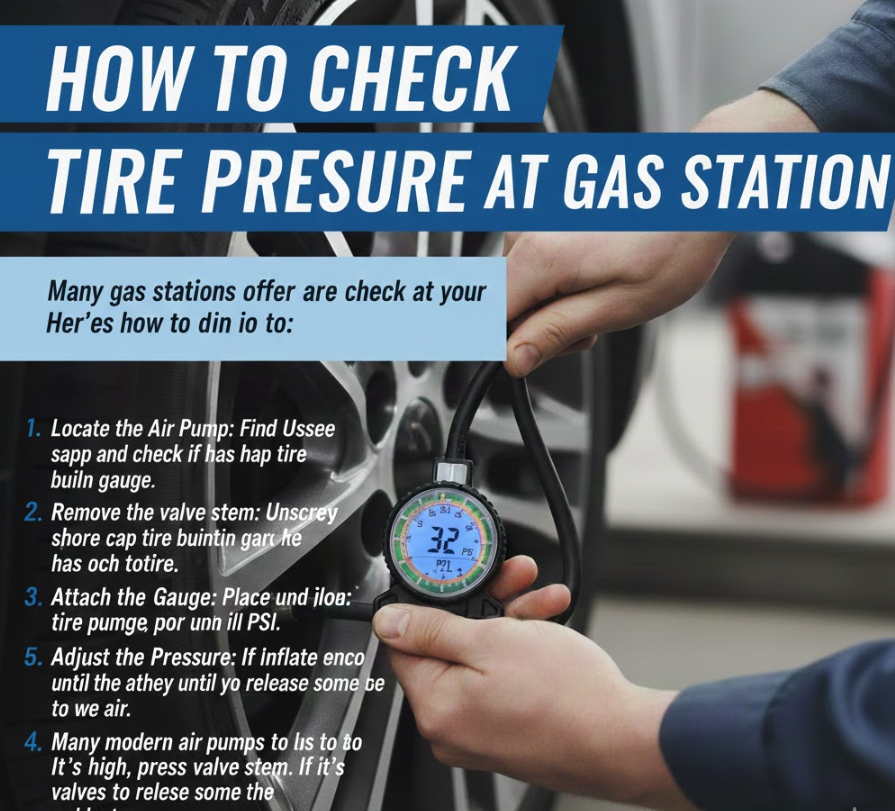
Many gas stations offer air pumps where you can check and adjust your tire pressure. Here’s how to do it:
- Locate the Air Pump: Find the air pump at the gas station and check if it has a built-in gauge.
- Remove the Valve Stem Cap: Unscrew the cap on the valve stem of each tire.
- Attach the Gauge: Place the nozzle onto the valve stem and allow the air pump to fill the tire. If there is a built-in gauge, it will show you the current tire pressure.
- Adjust the Pressure: If the pressure is too low, inflate the tire until it reaches the recommended PSI. If it’s too high, press the valve stem to release some air.
Many modern air pumps offer digital readouts, making it easier to achieve the correct pressure.
Tips for Maintaining Optimal Tire Pressure
To keep your tires in top condition:
- Check Tire Pressure Monthly: Regular checks will prevent issues and improve vehicle performance.
- Inspect for Damage: Look for cuts, punctures, or bulges that might indicate tire damage.
- Don’t Overinflate: Overinflated tires can lead to poor handling and increased wear.
- Use TPMS: Your car’s TPMS is an excellent tool for monitoring tire health. Just be sure to check with a gauge regularly.
Also Read: How to Change a Tire: A Complete Step-by-Step Guide for Cars, Bikes, and More
Conclusion
Proper tire pressure is essential for vehicle safety, efficiency, and tire longevity. Knowing how to check tire pressure on different vehicles, whether it’s a Honda Civic, Mazda CX-5, Tesla, or Audi Q5, is key to maintaining optimal driving conditions. Regular tire pressure checks can prevent issues such as poor fuel economy, tire wear, and blowouts, ensuring that you’re driving safely on the road.
Remember, while TPMS is a helpful tool, always verify your tire pressure manually to ensure its accuracy. Keeping your tires properly inflated is one of the easiest ways to maintain your car’s overall health.
FAQs
Q1: How often should I check my tire pressure?
A1: You should check your tire pressure at least once a month and before long trips.
Q2: What happens if I drive with low tire pressure?
A2: Driving with low tire pressure can cause poor fuel efficiency, uneven tire wear, and increased risk of a blowout.
Q3: Can I use a digital gauge for tire pressure?
A3: Yes, digital gauges provide precise readings and are easy to use.
Q4: How do I reset my TPMS?
A4: To reset your TPMS, follow the instructions in your car’s manual. Typically, this involves driving at a certain speed for a period or using the vehicle’s reset button.
Q5: Can I check tire pressure at a gas station?
A5: Yes, many gas stations have air pumps with built-in gauges that allow you to check and adjust your tire pressure.
For More Visit Little D Brewfest
