
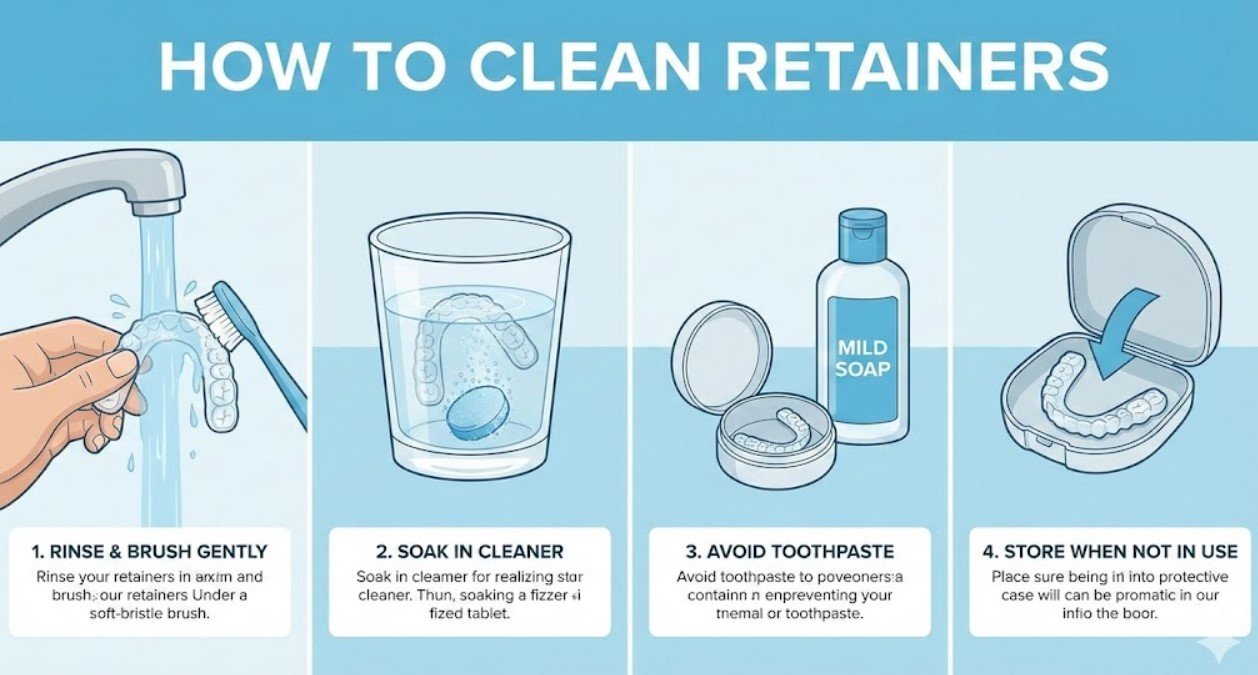
Retainers are essential for maintaining the alignment of your teeth after orthodontic treatment. Whether you’re wearing a clear plastic retainer, a wire retainer, or a night guard, keeping your retainer clean is crucial for both hygiene and comfort. If left unchecked, bacteria, plaque, and food particles can accumulate on your retainer, potentially leading to bad breath, discoloration, and even damage to your dental health. This article will provide detailed, easy-to-follow steps on how to clean retainers effectively, including how to clean retainers at home, and using common household products like baking soda, vinegar, and hydrogen peroxide.
Also Read: How Long to Smoke Chicken Breast: A Complete Guide for Perfect Results
Why Cleaning Your Retainer Is Essential
Before diving into the various cleaning methods, it’s important to understand why cleaning your retainer is essential. Just like any dental appliance, retainers can accumulate plaque, bacteria, and debris. Failing to clean your retainer regularly can lead to:
- Bad Breath (Halitosis): Bacteria buildup on your retainer can lead to unpleasant odors in your mouth.
- Discoloration: Plaque and bacteria can discolor your retainer, especially if left uncleaned for extended periods.
- Health Issues: If the bacteria on your retainer enter your mouth, they can contribute to gum disease, cavities, and other oral health issues.
- Damaged Retainers: A dirty retainer can suffer from wear and tear more quickly, leading to potential breaks or discoloration.
To keep your retainer clean, it’s recommended that you clean it daily and deep clean it at least once a week. Let’s explore the various methods you can use.
How to Clean Retainers at Home
One of the easiest ways to keep your retainer in good condition is by cleaning it regularly at home. There are several methods that you can use, depending on the type of retainer and your preference. Let’s explore some of the most common methods for cleaning your retainer at home.
1. How to Clean Retainers with Baking Soda
Baking soda is an excellent natural cleanser that can help remove plaque and bacteria from your retainer. It’s also a gentle abrasive, meaning it can help polish your retainer without damaging it.
Steps to Clean Retainers with Baking Soda:
- Create a Paste: Mix one tablespoon of baking soda with a small amount of water to create a paste.
- Brush Your Retainer: Use a soft toothbrush to apply the paste to your retainer. Gently scrub all surfaces of the retainer, focusing on areas with visible plaque buildup.
- Rinse Thoroughly: After scrubbing, rinse the retainer under lukewarm water to remove any remaining baking soda. Make sure to clean all corners and crevices.
Tip: Baking soda is great for regular cleaning, but you may want to deep clean your retainer once a week using another method to ensure it remains in top condition.
2. How to Clean Retainers with Vinegar
Vinegar is a powerful disinfectant and a great solution for removing buildup on your retainer. White vinegar is commonly used for cleaning, as it is mild and effective without being abrasive.
Steps to Clean Retainers with Vinegar:
- Prepare a Vinegar Solution: Mix one part white vinegar with one part water in a cup or small bowl.
- Soak the Retainer: Place your retainer in the solution for about 15-20 minutes.
- Scrub the Retainer: After soaking, use a soft toothbrush to scrub away any loosened plaque or buildup.
- Rinse Thoroughly: Rinse the retainer with lukewarm water and dry it with a clean towel.
Note: Vinegar can help eliminate odors and disinfect your retainer, but it’s not the best option for daily cleaning due to its strong smell.
3. How to Clean Retainers with Plaque
Cleaning retainers with plaque buildup requires a little more effort, as plaque can be stubborn. Plaque often forms when food and bacteria accumulate and harden on the retainer, making it more challenging to remove.
Steps to Clean Retainers with Plaque:
- Soak in an Antibacterial Solution: Use an antibacterial retainer cleaner, or make a mixture of water and mouthwash. Soak the retainer for 20-30 minutes to loosen plaque buildup.
- Brush the Retainer: Use a soft-bristled toothbrush to gently scrub the retainer, focusing on the areas where plaque is visible.
- Rinse and Dry: After brushing, rinse the retainer thoroughly with lukewarm water.
Tip: You can also try using a denture cleaning tablet for extra cleaning power.
4. How to Clean Retainers with Hydrogen Peroxide
Hydrogen peroxide is another effective and affordable cleaning solution. It acts as both a disinfectant and a stain remover, making it great for cleaning retainers.
Steps to Clean Retainers with Hydrogen Peroxide:
- Prepare the Solution: Mix equal parts of hydrogen peroxide (3% concentration) and water.
- Soak the Retainer: Submerge your retainer in the hydrogen peroxide solution for about 10-15 minutes.
- Brush and Rinse: After soaking, use a soft toothbrush to scrub your retainer gently. Rinse the retainer thoroughly with lukewarm water.
Note: Hydrogen peroxide is effective at killing bacteria and removing stains but should not be used for daily cleaning as it may degrade over time if used too frequently.
Also Read: How to Remove Eyelash Extensions at Home Safely: Complete Guide
5. How to Clean Retainers Daily
Cleaning your retainer daily is essential to prevent plaque buildup and maintain proper hygiene. Here’s how to clean your retainer every day:
- Rinse After Use: Always rinse your retainer with water immediately after use to remove any food particles or bacteria.
- Brush Regularly: Use a soft toothbrush with a small amount of mild dish soap or gentle toothpaste to brush your retainer daily. Be sure to clean all surfaces.
- Avoid Hot Water: Never clean your retainer with hot water, as it can warp or damage it. Always use lukewarm or cold water.
6. How to Clean Retainers After Strep
If you’ve had strep throat or any other illness that involves an infection, it’s essential to thoroughly disinfect your retainer to avoid reinfection.
Steps to Clean Retainers After Strep:
- Soak in Hydrogen Peroxide or Vinegar Solution: Soak your retainer in a disinfecting solution such as hydrogen peroxide or white vinegar for 15-20 minutes.
- Brush Thoroughly: After soaking, brush your retainer with a toothbrush to remove any remaining bacteria.
- Rinse and Dry: Rinse your retainer thoroughly with water and dry it with a clean towel.
Tip: If you’re concerned about contamination, it may be a good idea to replace your retainer if it was exposed to bacteria for an extended period.
7. How to Clean Retainers with Cleaning Crystals
Cleaning crystals are specifically designed to clean retainers and dentures. They are a convenient and effective solution for those who want a quick cleaning method.
Steps to Clean Retainers with Cleaning Crystals:
- Prepare the Solution: Follow the manufacturer’s instructions on the packet for the correct amount of cleaning crystals and water.
- Soak Your Retainer: Place your retainer in the solution and let it soak for the recommended amount of time (usually 15-20 minutes).
- Rinse Thoroughly: After soaking, rinse your retainer with lukewarm water.
Tip: Cleaning crystals are great for deep cleaning but should not be used daily. They are best for periodic cleaning or for situations where plaque and bacteria buildup are more severe.
Also Read: How to Remove Wine Stains: Effective Solutions for Every Surface
8. How to Clean Retainers Properly
To ensure your retainer remains in the best condition possible, it’s essential to follow the proper cleaning techniques. This includes:
- Brush Daily: Use a soft toothbrush and mild soap to brush your retainer each day.
- Deep Clean Weekly: Use hydrogen peroxide, vinegar, or cleaning crystals for a deeper cleaning at least once a week.
- Store Properly: Always store your retainer in a clean, dry case when you’re not using it to prevent contamination.
Conclusion: Keep Your Retainers Fresh and Hygienic
Cleaning your retainer is a crucial part of maintaining good oral hygiene and ensuring that your retainer lasts. Whether you’re using baking soda, vinegar, hydrogen peroxide, or cleaning crystals, there are various effective methods to choose from. By incorporating daily cleaning habits and deep cleaning once a week, you can keep your retainer fresh, hygienic, and in good condition.
FAQs
- How often should I clean my retainer? It’s recommended to clean your retainer daily to prevent bacteria buildup. Additionally, perform a deep cleaning at least once a week.
- Can I clean my retainer with toothpaste? Yes, but use a mild toothpaste and avoid whitening toothpaste, as it can be too abrasive and damage the retainer.
- Is vinegar safe to clean my retainer? Yes, white vinegar is safe for cleaning retainers when used in a diluted solution. Avoid using it too frequently as its strong odor may linger on your retainer.
- Can I use hot water to clean my retainer? No, hot water can warp or damage your retainer. Always use lukewarm or cold water.
For More Visit Little D Brewfest
